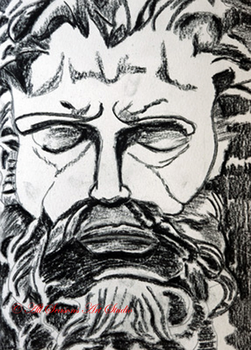
Artwork Gallery
An "insignificant man" is defined not by his inherent lack of value, but by his invisibility to the grand, noisy machinery of the world. He is the face lost in the morning rush-hour crowd, the silent operator of life’s background tasks whose labor is consumed but never acknowledged. In the ledger of history, his name is unrecorded, his opinions unmapped, and his passing unnoted by the public square.
Societally, insignificance is often equated with a lack of influence, wealth, or power. He does not command rooms or shape policies; instead, he adapts to the decisions of others, living in the margins of systems built for the prominent. His daily existence is defined by quiet routines—mundane struggles and modest joys that unfold without an audience.
Yet, this outward insignificance hides a profound paradox. While the world may deem him inconsequential, he is the center of his own vast, quiet universe. He experiences the same depth of grief, the same warmth of love, and the same terrifying existential questions as any monarch or tycoon. Furthermore, the collective weight of these "insignificant" lives is the actual engine of humanity, quietly building, sustaining, and carrying the world forward. Thus, his insignificance is merely a trick of perspective—a failure of society to look closely enough to see the quiet dignity in the ordinary.
The archetype of the "girl next door" is however philosophically superb because she represents the triumph of the immanent over the transcendent. In a world often obsessed with distant, highly curated icons of perfection—which exist only as disembodied, unattainable abstractions—the girl next door is a monument to concrete reality.
She represents the sublime beauty of proximity. While the distant muse invites sterile longing, the girl next door invites genuine relationship. Philosophically, she is the "Other" made familiar, bridging the vast existential chasm between the self and the world. Her charm lies not in a calculated performance of mystique, but in her radical authenticity. Rooted in the shared geography of everyday life, her vulnerability is visible, her flaws are humanizing, and her warmth is accessible.
To appreciate her is to practice what philosophers call the aesthetics of the everyday. She is a living embodiment of amor fati—a deep acceptance and love of life as it actually presents itself, free from the exhaustion of artificial pretense. In her simplicity, she teaches a profound truth: that the deepest mysteries of human connection do not require a journey to the exotic. Instead, the truly extraordinary is already dwelling right beside us, waiting to be recognized in the quiet grace of the familiar.
Meaning In rhetoric, "the light of the world" is one of humanity’s most potent archetypal metaphors, transcending its theological origins to become a master symbol of moral clarity, epistemic truth, and hope. To designate something or someone as this "light" is to employ a persuasive framing device that instantly establishes an absolute binary: illumination versus darkness, knowledge versus ignorance, and order versus chaos.
Rhetorically, the metaphor functions on three distinct levels:
First, it acts as an agent of exposure. Light reveals what is hidden, transforming abstract ideals of justice and truth into visible, undeniable realities.
Second, it serves as a beacon. It guides the lost, providing a collective focal point that inspires unified action. When an idea, a movement, or a leader is cast as this light, they are rhetorically clothed in unquestionable benevolence and authority.
Third, it offers existential comfort. By positioning truth as a brilliant, warmth-giving force, the rhetoric appeals directly to pathos, offering solace against the cold, disorienting void of uncertainty.
Ultimately, the supreme rhetorical power of the "light of the world" lies in its self-evident necessity. No one argues in favor of darkness. By framing an ideology, a virtue, or a human life as this essential light, a speaker does not merely argue for their cause; they make it appear as natural, life-giving, and crucial to human survival as the dawn itself.
Societally, insignificance is often equated with a lack of influence, wealth, or power. He does not command rooms or shape policies; instead, he adapts to the decisions of others, living in the margins of systems built for the prominent. His daily existence is defined by quiet routines—mundane struggles and modest joys that unfold without an audience.
Yet, this outward insignificance hides a profound paradox. While the world may deem him inconsequential, he is the center of his own vast, quiet universe. He experiences the same depth of grief, the same warmth of love, and the same terrifying existential questions as any monarch or tycoon. Furthermore, the collective weight of these "insignificant" lives is the actual engine of humanity, quietly building, sustaining, and carrying the world forward. Thus, his insignificance is merely a trick of perspective—a failure of society to look closely enough to see the quiet dignity in the ordinary.
The archetype of the "girl next door" is however philosophically superb because she represents the triumph of the immanent over the transcendent. In a world often obsessed with distant, highly curated icons of perfection—which exist only as disembodied, unattainable abstractions—the girl next door is a monument to concrete reality.
She represents the sublime beauty of proximity. While the distant muse invites sterile longing, the girl next door invites genuine relationship. Philosophically, she is the "Other" made familiar, bridging the vast existential chasm between the self and the world. Her charm lies not in a calculated performance of mystique, but in her radical authenticity. Rooted in the shared geography of everyday life, her vulnerability is visible, her flaws are humanizing, and her warmth is accessible.
To appreciate her is to practice what philosophers call the aesthetics of the everyday. She is a living embodiment of amor fati—a deep acceptance and love of life as it actually presents itself, free from the exhaustion of artificial pretense. In her simplicity, she teaches a profound truth: that the deepest mysteries of human connection do not require a journey to the exotic. Instead, the truly extraordinary is already dwelling right beside us, waiting to be recognized in the quiet grace of the familiar.
Meaning In rhetoric, "the light of the world" is one of humanity’s most potent archetypal metaphors, transcending its theological origins to become a master symbol of moral clarity, epistemic truth, and hope. To designate something or someone as this "light" is to employ a persuasive framing device that instantly establishes an absolute binary: illumination versus darkness, knowledge versus ignorance, and order versus chaos.
Rhetorically, the metaphor functions on three distinct levels:
First, it acts as an agent of exposure. Light reveals what is hidden, transforming abstract ideals of justice and truth into visible, undeniable realities.
Second, it serves as a beacon. It guides the lost, providing a collective focal point that inspires unified action. When an idea, a movement, or a leader is cast as this light, they are rhetorically clothed in unquestionable benevolence and authority.
Third, it offers existential comfort. By positioning truth as a brilliant, warmth-giving force, the rhetoric appeals directly to pathos, offering solace against the cold, disorienting void of uncertainty.
Ultimately, the supreme rhetorical power of the "light of the world" lies in its self-evident necessity. No one argues in favor of darkness. By framing an ideology, a virtue, or a human life as this essential light, a speaker does not merely argue for their cause; they make it appear as natural, life-giving, and crucial to human survival as the dawn itself.
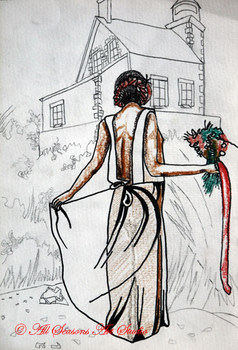
A Bird in Hand, 2020, 15cm x 20.5cm, mixed media
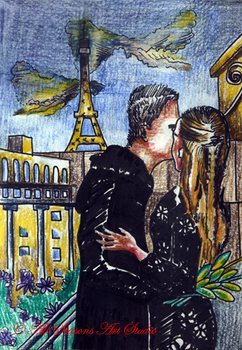
A Lovers Embrace, 2020 15cm x 20.5cm, mixed media

Beach Abs, 15cm x 20.5cm, coloured pencils

Bikini Girl, 15cm x 20.5cm, coloured pencils
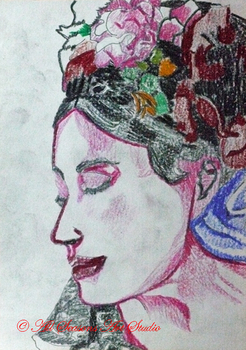
Carnival Time, 15cm x 20.5cm, coloured pencils
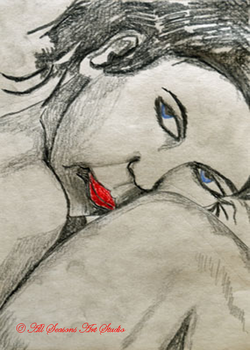
Femme Fatale, 15cm x 20.5cm, mixed media
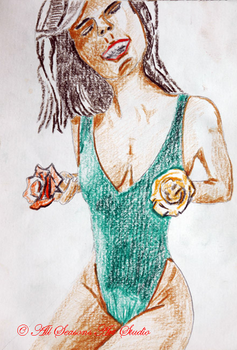
Flower Girl, 2020, 15cm x 20.5cm, coloured pencils

Heroine, 20cm x 29cm, mixed media

Hey Sunshine, 15cm x 20.5cm, coloured pencils
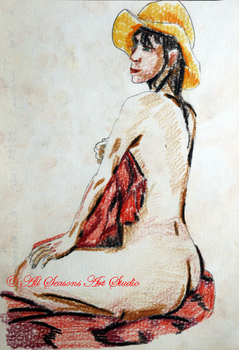
I Was Thinking, 2020, 15cm x 20.5cm, coloured pencils
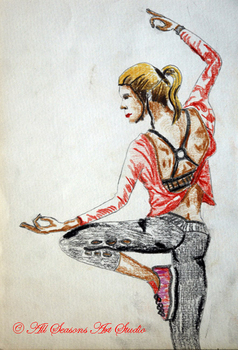
In Balance, 2020, 15cm x 20.5cm, coloured pencils
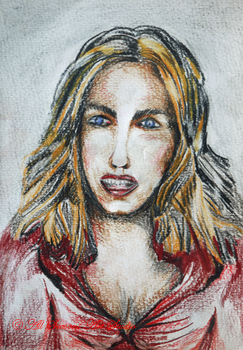
Kate Beckinsale, 2022, 15cm x 20.5cm, coloured pencils
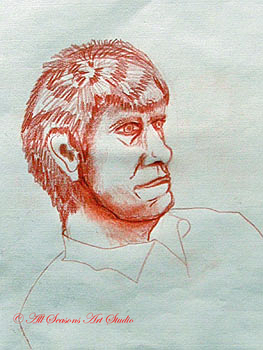
Lion Man, 21cm x 29.5cm, sanguine pencil
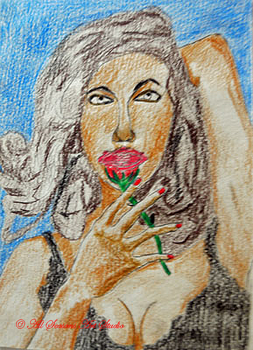
Love Me Tender, 15cm x 20.5cm, coloured pencils
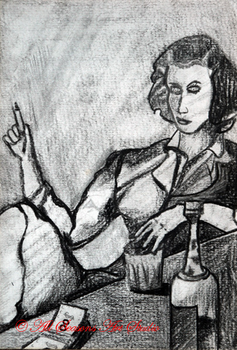
What's up Joe, 2020, 15cm x 20.5cm, charcoal pencil
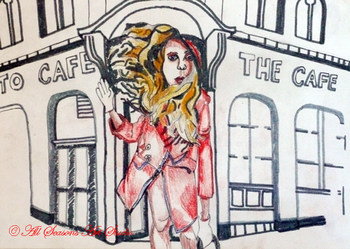
The Royal, 20cm x 29cm, mixed media

Teen Idol, 15cm x 20.5cm, coloured pencils
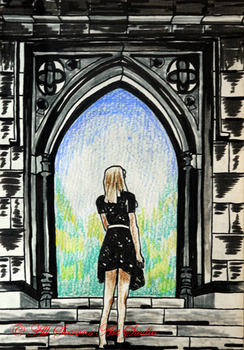
Puberty, 2020, 15cm x 20.5cm, mixed media
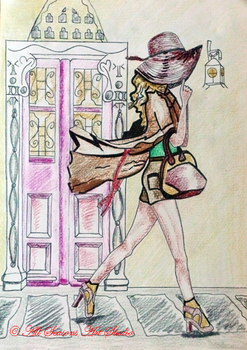
One Fine Day, 20cm x 29cm, mixed media